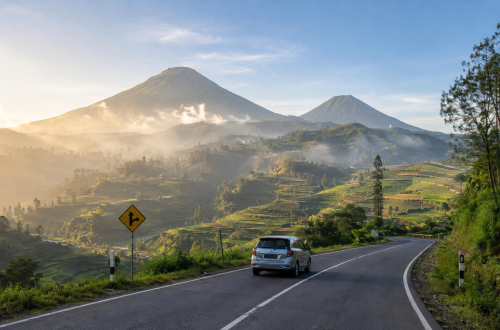
High above the plains of Central Java, the Dieng Plateau reveals a landscape unlike anywhere else in Indonesia. Mist drifts across green mountains, ancient temples rise from fertile volcanic soil, and clouds of steam escape from beneath the earth. Among the plateau’s most fascinating natural attractions is Kawah Sikidang, or Sikidang Crater—an active geothermal area where visitors can witness the restless energy of the planet at remarkably close range.
Located in Dieng Kulon Village, Batur District, Banjarnegara Regency, Kawah Sikidang is easily accessible from the town of Wonosobo and is one of the most popular destinations in the greater Dieng tourism area. The Dieng Plateau itself lies at an elevation of approximately 2,000 metres above sea level, giving the region its characteristically cool weather, mountain scenery, and frequent layers of atmospheric mist.
A Landscape That Feels Otherworldly
The first thing visitors notice at Kawah Sikidang is the dramatic contrast between its barren geothermal terrain and the surrounding green hills.
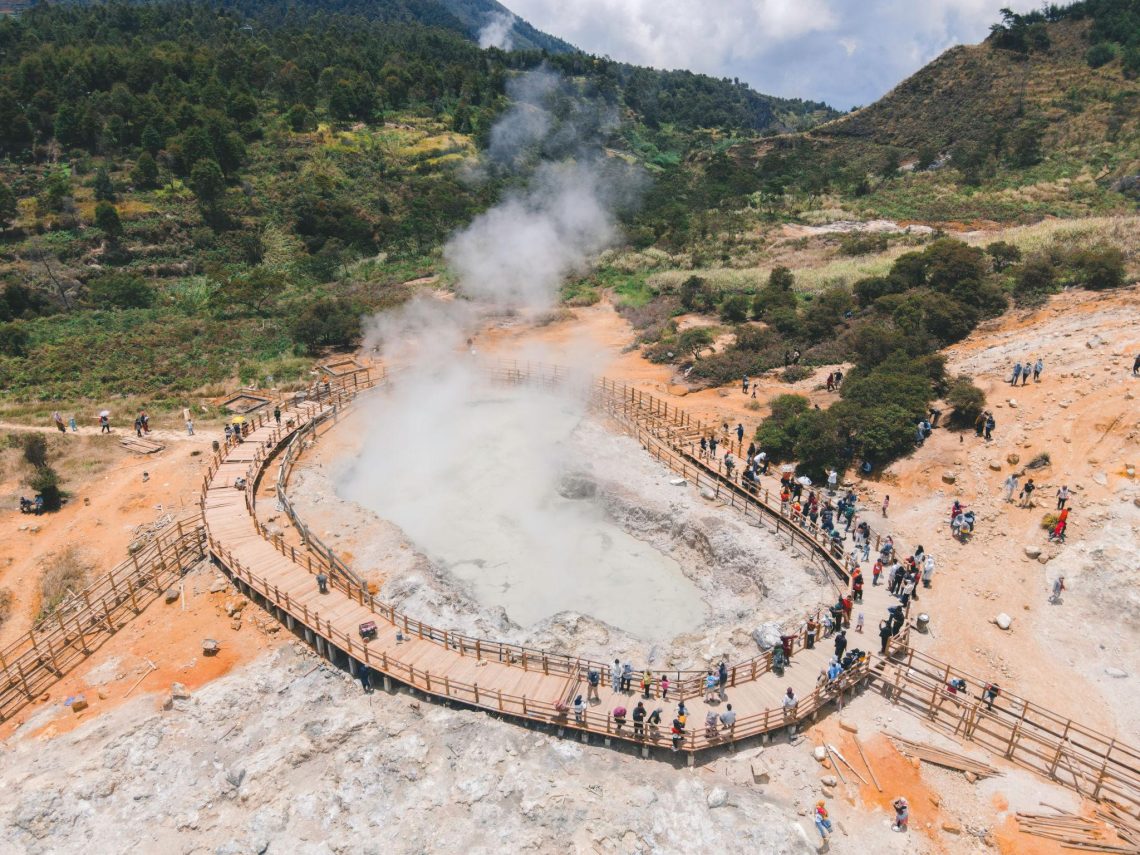
White steam rises continuously from the crater, drifting across mineral-stained ground in shades of grey, yellow, brown, and pale orange. Beneath the steam, hot water and mud bubble as heat and gases travel upward from deep within the earth.
Unlike the classic image of a volcano with a towering cone and a single crater at its summit, Kawah Sikidang spreads across a relatively open and accessible field. Its geothermal landscape includes fumaroles, mud pools, steaming ground, solfataras, and rocks altered by intense heat and volcanic fluids. These features make the area both a natural attraction and an open-air classroom for understanding volcanic and geothermal processes.
A wooden boardwalk guides visitors through the area and around the main crater. From this elevated path, travellers can safely observe clouds of steam, bubbling pools, and the unusual textures created by sulfur and other minerals.
The sound of boiling water, the movement of the steam, and the unmistakable smell of sulfur create an experience that engages nearly every sense.
Why Is It Called “Sikidang”?
The name Sikidang is closely connected to the crater’s unusual behaviour.
In Javanese, the word kidang means deer. According to local explanations, geothermal vents and bubbling crater points in this area have appeared to shift from one location to another. Their movement is compared to a deer jumping across an open field.
This “jumping” characteristic inspired the name Kawah Sikidang and distinguishes it from many other volcanic craters. Rather than remaining concentrated in one permanent opening, its geothermal activity has historically appeared at different points within the crater complex.
The name gives the site an additional layer of cultural meaning. It connects a complex geological phenomenon with local language, observation, and storytelling.
The Science Beneath the Steam
Kawah Sikidang is more than a beautiful volcanic attraction. It is one of the visible surface expressions of the much larger Dieng geothermal system.
Rainwater and groundwater can travel through cracks and porous volcanic rocks beneath the surface. As the water moves deeper underground, it is heated by hot rocks associated with the volcanic system. The heated fluids and gases then rise again through fractures, eventually emerging as steam vents, hot pools, boiling mud, and mineral deposits.
Geological research has identified the Sikidang sector as an important part of the Dieng geothermal system. Deep drilling in the area has encountered temperatures exceeding 300 degrees Celsius, illustrating how the peaceful-looking highland landscape is connected to an extremely hot environment far below the surface.
This underground heat is not only scientifically significant. Geothermal resources in the Dieng area have also been developed as a source of renewable energy, demonstrating how volcanic activity can support electricity generation as well as tourism and scientific education.
A Valuable Geotourism Destination
Kawah Sikidang offers an excellent example of geotourism, a form of tourism that allows people to appreciate landscapes while learning about the geological processes that created them.
Visitors do not simply come to take photographs. They can observe evidence of heat, pressure, water circulation, volcanic gases, and mineral alteration directly in the landscape. The crater therefore provides opportunities for education in geology, volcanology, renewable energy, environmental management, and disaster awareness.
Its accessibility makes the experience particularly memorable. In many volcanic regions, active geothermal features can only be seen after a difficult climb or from a great distance. At Kawah Sikidang, visitors can walk along a designated path and observe the activity from relatively close viewing points.
The constantly rising steam also transforms the scenery from moment to moment. A clear view may suddenly disappear behind a white cloud before the crater is revealed again seconds later. This changing atmosphere makes every photograph and every visit feel slightly different.
Visiting Responsibly and Safely
Although Kawah Sikidang is open as a tourist attraction, it remains an active geothermal environment. Visitors should always treat the area with caution.
Stay on the official boardwalk, obey warning signs, follow instructions from site officers, and never cross safety barriers. Geothermal areas may contain extremely hot water, unstable ground, sudden mud eruptions, and potentially dangerous volcanic gases. Geological studies of Kawah Sikidang highlight hazards such as toxic gas exposure, mud bursts, and phreatic activity, making responsible site management essential.
Visitors who are sensitive to sulfur smells may find a mask helpful. Comfortable footwear, warm clothing, drinking water, and protection from sudden rain are also recommended because conditions in the Dieng Highlands can change quickly.
Responsible travel also means protecting the environment. Avoid leaving rubbish, damaging mineral formations, or stepping beyond designated paths. By following these simple principles, visitors help preserve the crater for future generations.
More Than Just a Crater
A visit to Kawah Sikidang can easily become part of a wider journey through the Dieng Plateau.
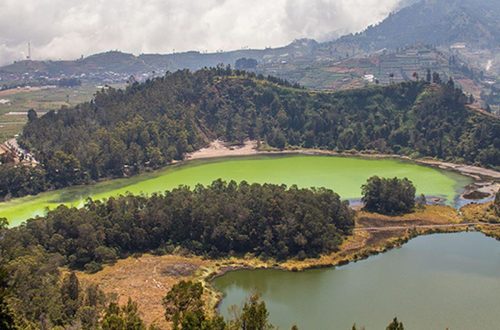
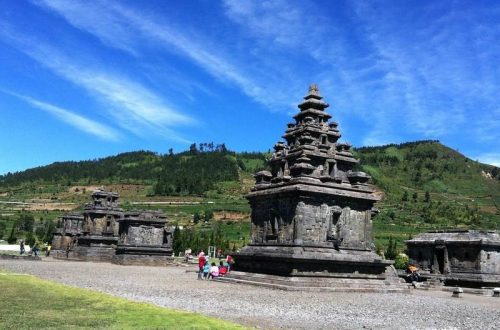
The region is known for attractions such as the Arjuna Temple Complex, Telaga Warna, highland farms, mountain viewpoints, and traditional villages. Together, these destinations present Dieng as a place where geological wonders, ancient history, local culture, agriculture, and everyday community life exist side by side.
This combination gives Kawah Sikidang a special place within the Dieng experience. It is not merely a stop on a sightseeing route, but a vivid reminder that the highlands remain geologically alive.
Where the Earth Reveals Its Energy
Kawah Sikidang invites travellers to see the earth not as something silent and motionless, but as a dynamic planet filled with heat and energy.
Its bubbling mud, drifting sulfurous steam, shifting vents, and mineral-rich terrain create a landscape that is dramatic, educational, and deeply memorable. Surrounded by the cool air and green mountains of the Dieng Highlands, the crater offers an extraordinary meeting between beauty and geological power.
For nature lovers, photographers, students, and curious travellers, Kawah Sikidang is a destination that deserves to be explored thoughtfully. It is exotic without being artificial, spectacular without losing its scientific importance, and powerful enough to remind every visitor that beneath the calm surface of Dieng, the earth is still breathing.