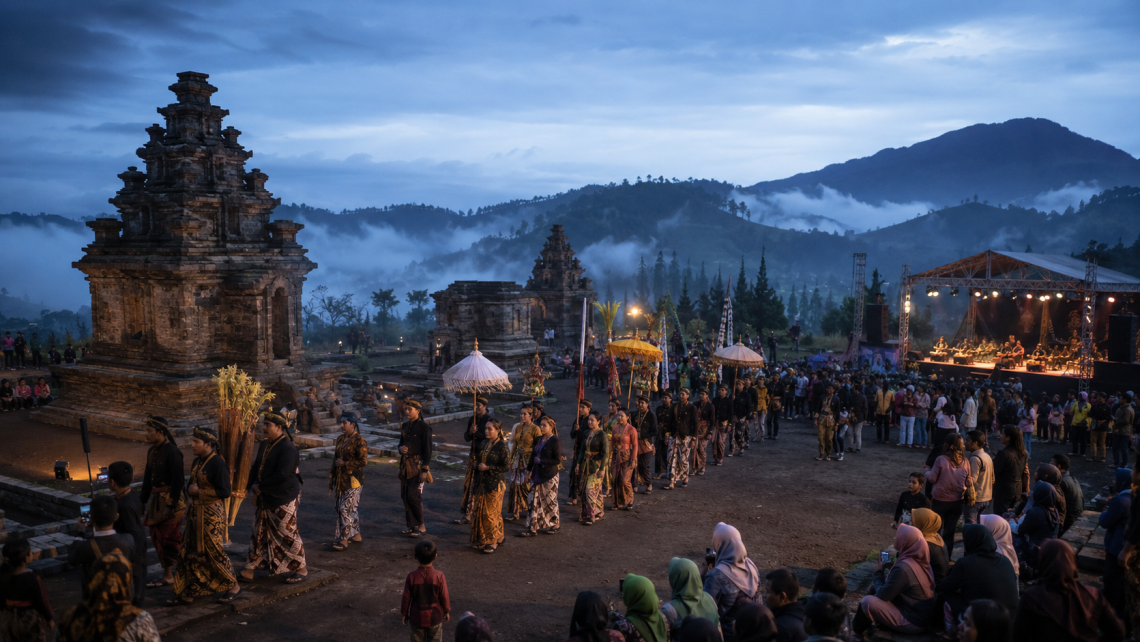
Mist, ancient temples, music, coffee, and centuries-old traditions came together once again at Dieng Culture Festival 2026.
Held from 28 to 30 August 2026 in Dieng Kulon, Batur District, Banjarnegara Regency, Central Java, the festival marked its 16th edition with the theme “Spirit of Harmony.”
More than a major tourism event, Dieng Culture Festival—widely known as DCF—served as a meeting place for local communities, visitors, artists, cultural practitioners, and small businesses. Over three days, the Dieng Plateau became a living stage where heritage was not merely displayed but experienced and celebrated together.
The Meaning Behind “Spirit of Harmony”
The theme “Spirit of Harmony” reflected the relationship between people, nature, culture, and the Creator.
This message carries particular significance in Dieng, a highland region known for its dramatic volcanic landscape and deeply rooted traditions. The area’s growing popularity as a tourist destination brings economic opportunities, but it also creates a shared responsibility to protect its environment and cultural identity.
According to the official Dieng Culture Festival website, DCF was born from the collective efforts of the Dieng community. It is not simply an annual spectacle, but a way for local people to preserve their stories, living spaces, and cultural identity for future generations.
The spirit of harmony was also expressed through calls for visitors to respect local customs, maintain cleanliness, follow safety rules, and help protect the fragile highland environment.
The Sacred Dreadlock-Cutting Ritual
At the heart of Dieng Culture Festival 2026 was the sacred dreadlock-cutting ceremony, locally known as the Ruwatan Rambut Gimbal.
Held at the Arjuna Temple complex, the ceremony involved 13 children with naturally occurring dreadlocks. Within Dieng tradition, these children are believed to hold a special spiritual significance. Their hair cannot simply be cut whenever their parents choose.
The ceremony may only take place after the child personally asks for the haircut. Before the ritual begins, the child also makes a special request that the family is expected to fulfil. These requests can range from simple gifts to unusual items chosen by the child.
This makes the ritual far more than a tourist attraction. It is a deeply meaningful tradition involving prayers, family, gratitude, and hopes for the child’s future.
The ceremony was preceded by a cultural procession to the Arjuna Temple complex. The children, their families, traditional leaders, artists, and community members walked together through the historic temple grounds, creating one of the festival’s most moving moments.
The Central Java Provincial Government reported that the ceremony remained one of the most anticipated events of DCF 2026.
Music in the Mist at Jazz Atas Awan
Alongside its traditional ceremonies, DCF 2026 also brought back Jazz Atas Awan, or “Jazz Above the Clouds.”
An outdoor concert in the cold, misty Dieng Highlands offers an atmosphere unlike that of an ordinary music festival. Mountain fog, warm stage lighting, and the silhouette of the surrounding hills transformed the evening performances into an intimate experience.
The 2026 line-up featured prominent Indonesian artists, including Yura Yunita, Kunto Aji, Barasuara, Raim Laode, and Pusakata.
While nationally recognised musicians attracted large audiences, the festival continued to provide space for traditional performers and local communities. This balance ensured that contemporary entertainment complemented rather than overshadowed Dieng’s cultural identity.
The evening also featured the release of lanterns, filling the dark highland sky with points of light carrying the hopes and prayers of festival participants.
Coffee, Local Crafts, and the Iconic Batur Sheep
DCF 2026 extended well beyond its main stage and ceremonial programme.
Visitors could explore the Dieng Coffee Festival, traditional art performances, caping-painting activities, exhibitions of local products, keroncong music, and the Batur Sheep Festival.
The coffee festival created a meeting point for farmers, roasters, small business owners, and visitors interested in discovering the flavours of highland-grown coffee. The Batur Sheep Festival, meanwhile, introduced visitors to a distinctive breed closely associated with the Dieng Plateau.
Local products such as carica fruit, purwaceng herbal drinks, batik, traditional hats, coffee, and agricultural goods were also prominently featured.
These activities allowed visitors to engage with Dieng beyond its scenery. They also gave local producers an opportunity to introduce their work to a much wider audience.
With accommodation across the Dieng area nearly fully booked during the festival, the economic benefits were felt by homestay owners, food vendors, transport providers, farmers, craftspeople, and other local businesses.
A Festival Created by the Community
One of the defining strengths of Dieng Culture Festival is its community-based character.
The festival grew from an initiative led by Pokdarwis Dieng Pandawa and has continued to develop with the support of residents, cultural groups, government institutions, artists, communities, and local businesses.
Local people are not merely spectators at an event taking place in their own village. They are its organisers, cultural guardians, hosts, and primary stakeholders.
Tradition remains at the centre of the festival, while music, tourism, and the creative economy serve as supporting elements. This is what distinguishes DCF from a conventional entertainment festival.
It demonstrates how cultural preservation can remain relevant when communities have the authority and opportunity to present their heritage on their own terms.
Caring for Dieng Beyond the Festival
The stages have been dismantled and visitors have returned home, but the message of “Spirit of Harmony” should not end with the closing ceremony.
Dieng faces complex challenges as visitor numbers continue to grow. Waste management, environmental protection, traffic congestion, public safety, and respect for local life must remain central to future tourism development.
Visitors also have an important role to play. Simple actions—avoiding littering, reducing single-use plastics, supporting local businesses, respecting sacred spaces, and following local regulations—can make a meaningful difference.
Dieng Culture Festival 2026 offered an important reminder that culture is not simply something to be performed for an audience. It is a living inheritance that must be respected, protected, and passed on.
Among Dieng’s temples, mist-covered hills, cold air, and welcoming communities, the Spirit of Harmony found its true meaning: a balance between the past and the present, tradition and change, tourism and conservation.
DCF 2026 may have ended, but the story of Dieng and the people who continue to safeguard its heritage lives on.

